Successful design isn’t just about aesthetics; it’s about crafting a message that resonates with an audience. According to a report from the World Economic Forum (WEF), creativity and emotional intelligence are two of the top skills that AI cannot easily replicate (Source: WEF). While AI can follow prompts to generate artwork, it lacks the deeper understanding of client needs and audience preferences that designers bring to the table.
For example, an AI might generate a logo based on keywords but miss the subtleties that differentiate a luxury brand from a playful one. Professional designers not only create but consult—listening to clients, revising concepts, and fine-tuning details to ensure that the final product truly reflects the brand’s personality and values.
Potential Risks of AI in Commercial Design
Using AI for commercial projects comes with certain legal and ethical challenges, particularly regarding copyright. Many AI models are trained on vast datasets, pulling from millions of existing images and artworks found online. While AI companies claim these models are not “stealing” artwork, the blurred origins of AI-generated content can lead to accidental copyright infringement. A legal analysis from Stanford University points out that copyright laws currently lack clarity on AI-generated works, creating potential risks for businesses and designers alike (Source: Stanford Law Review).
This uncertainty has led many agencies to exercise caution. Rather than risk potential copyright disputes, many businesses continue to value custom designs created by professional designers, who can ensure that all assets are legally sourced and licensed. Custom artwork also allows businesses to establish a unique brand identity, rather than relying on assets that may resemble existing designs.
When and How AI Can Support Graphic Designers
Despite its limitations, AI can be a powerful tool when used strategically. For example, Adobe’s recent integration of AI features in Photoshop provides designers with time-saving capabilities for certain repetitive tasks, like background removal or generating extended backgrounds for images. These tools allow designers to focus more on high-level creative work and less on manual, repetitive processes (Source: Adobe Blog).
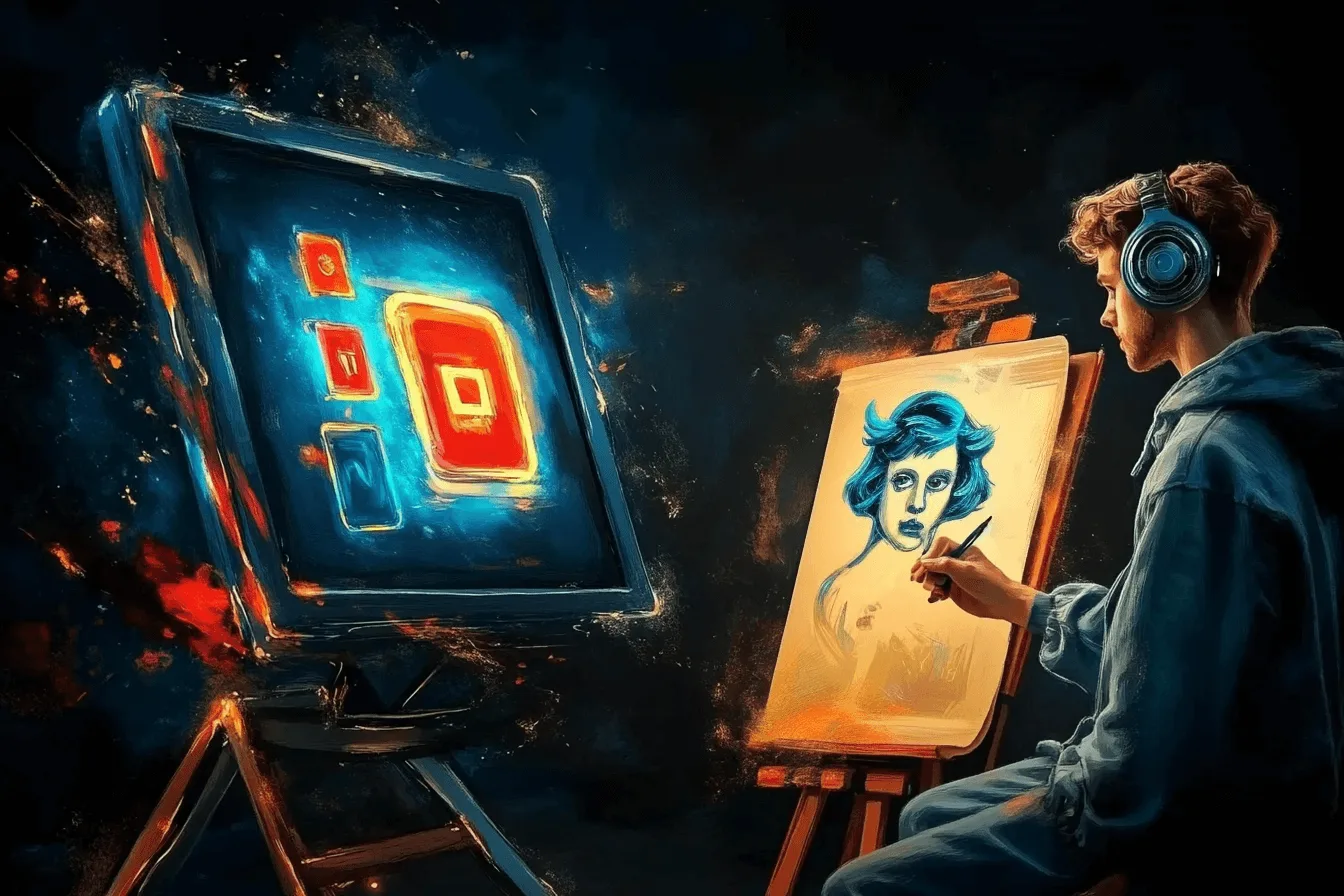
Align’s approach is to use AI for what it does best—streamlining workflows and enhancing productivity—while leaving the core creative decisions to human designers. AI can also assist in preliminary stages, like creating mood boards or generating quick concept sketches for brainstorming sessions. With this approach, AI becomes a supportive element rather than a replacement, enabling designers to work more efficiently without sacrificing originality or quality.
Why Human Creativity Remains Essential in Design
Design is more than just images and color schemes; it’s a means of storytelling. As Align sees it, successful design connects emotionally with audiences, and this connection requires a human touch. Research from Forrester reveals that while AI excels in tasks with clear rules or patterns, it falls short in complex, emotionally driven tasks, such as creating impactful advertising or brand messaging (Source: Forrester).
Consider a high-stakes project, like designing a campaign for a major brand or creating a logo for a global launch. While AI might be able to generate options quickly, only a skilled designer can interpret a brand’s values, collaborate with stakeholders, and refine details through multiple revisions. For now, and likely well into the future, AI simply lacks the ability to “feel” what makes design resonate on a human level.
Conclusion
In conclusion, while AI’s influence on graphic design continues to grow, its impact is best seen as a complementary tool rather than a replacement. Human designers bring a depth of creativity, emotional intelligence, and adaptability that AI cannot replicate. From developing unique brand stories to building connections with clients, designers add value in ways that go beyond technical capability. So, if you’re a designer or aspiring to be one, embrace AI as an ally in your creative journey. By leveraging AI thoughtfully, you can enhance your work and push the boundaries of what’s possible, all while keeping the unique human element front and center.